

Mold and MCS

I’ve been fighting yet another mold battle for most of this year.  I’ve done this enough now that you’d think I’d be an expert with a lot of wisdom to share.  What I’ve learned, though, is that there’s very little agreement in the mold illness community about even the basics, like the best testing methods, remediation practices, or the nature of mycotoxins (poisons produced by certain molds).  So, I write this post with trepidation, knowing that whatever I say is likely to meet pushback from some corner of the mold illness world.  I don’t write as a mold expert, by any means, but I can share my experiences, both with fighting mold and with how it overlaps and intersects with Multiple Chemical Sensitivity (MCS) or chemical toxicity in general.  I hope there’s something helpful in here somewhere.  Here are some of the things I’ve observed or experienced:

1.     Toxins are toxic, whether they’re biological or synthetic, and it’s not always easy to determine what’s affecting you.  I used to think I could tell.  There were a handful of symptoms that I identified as being my mold symptoms, but this time around, I didn’t have them, despite the fact that testing showed a very potent mold in the house and extremely high levels of a dangerous mycotoxin in my body.  Evidently, the mold exposure was adding to my toxic load and keeping my chemical sensitivity active, but not causing obviously different symptoms.

One possible explanation for this is that there are thousands of different types of mold (some say over 100,000, and some estimate there may be more than a million) and they can have very different properties and effects.  Molds can be allergenic, pathogenic, or toxigenic.  There have been times in the past when I’ve walked into a building with obvious mold issues (generally, I could smell it), but when I’ve mentioned it to others, I’ve been told that there couldn’t be mold, because the person I’m talking to has mold allergies and isn’t reacting.  Despite my frustration with that, I guess I basically did the same thing to myself by failing to recognize the mold in my house this time because I didn’t have my usual symptoms (and couldn’t smell or see anything problematic).

The overlap of symptoms that can be caused by mold (especially toxigenic types) and chemical toxins can be especially problematic for people focusing on avoiding one of the two.  My social media feed is often full of people who discovered mold in their home, escaped and moved to a new one (often a brand-new building, because they think the risk of mold is lower), and then found themselves just as sick as they were in their previous home.  They often first assume the new house has mold (which is certainly possible, since new houses aren’t always as mold-free as you would think), but then they gradually start suspecting that they’re reacting to the chemical offgassing of their new place.  They ask, “How do I know?” and there’s no good answer. 

I’ve sometimes seen this go the other direction, too.  Someone with chemical intolerance is unable to stay in their home, so they escape to an older building (or sometimes a travel trailer), where they fail to improve, because there’s hidden mold somewhere, which they later discover.  The bottom line is that in order to be healthy, we have to do our best to avoid toxins of both types – biological and synthetic.  There’s really no shortcut.
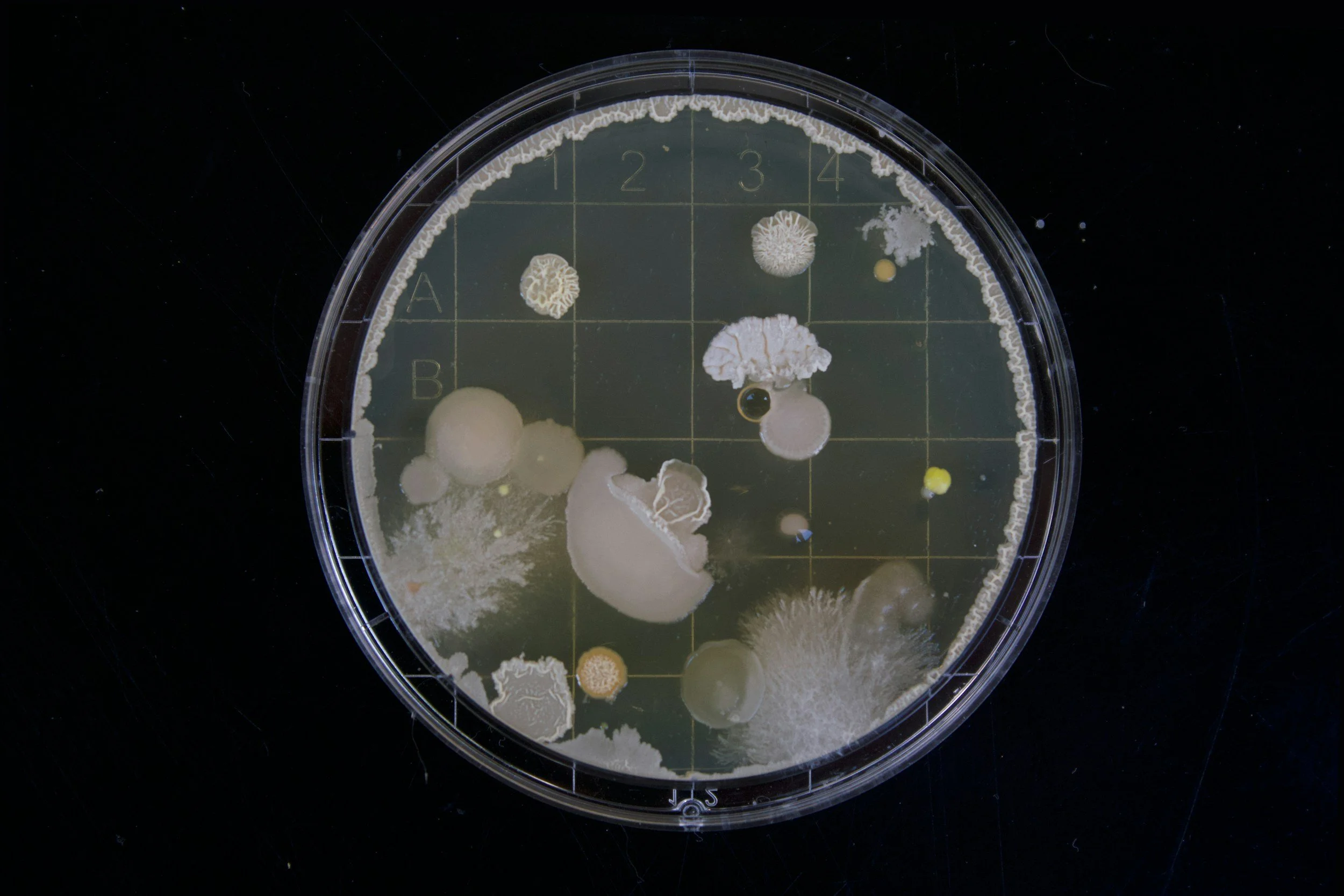
2.     Figuring out what’s in the air inside our homes and other buildings is easier said than done.  There are many different types of mold testing, and each type has its defenders and detractors.  I think it’s safe to say that none are perfect, and all can sometimes miss a problem. 

Testing for chemical contaminants has gotten better, but is also still imperfect.  The staggering number of synthetic chemicals that are produced is certainly part of the problem.  When I wrote my book, I said there were about 80,000 synthetic chemicals identified, which was the number generally agreed upon at the time.  Now, however, we know that there are over 350,000 synthetic chemicals registered for production and use.  The number of chemicals most commonly used is smaller, but still in the thousands, and commercially available testing isn’t able to recognize them all.  Also, testing for VOCs (volatile organic compounds) has improved, but there are many, many classes of problematic chemicals that aren’t VOCs, including some pesticides, heavy metals like lead, and endocrine disruptors like phthalates and parabens.   

There are pros and cons to all testing methods, and what seems best in one situation may not fit another.  My current personal approach is to focus on testing my body.  When people begin trying to avoid toxins, they often start with changing their food and personal care products, which are certainly important and logical places to start.  I’ve heard people say, though, that they’re focusing on what’s going into their body, and not on what’s around their body.  This is a false dichotomy, because if it’s around us, it will soon be in us.  Airborne contaminants can reach our bloodstream within minutes of being inhaled. Also, airborne particles can fall onto our food, and be consumed along with it.

3.     Air filters are important and helpful, for both mold and chemical issues, but not a solution in and of themselves.  There’s no substitute for source control (i.e. keeping the problematic substances out of the building). For mold, the source of the problem has to be found, and contaminated building materials have to be carefully (professionally, under containment) removed.  For chemical contamination, sometimes offgassing can be contained or addressed in other ways, such as baking off, but sometimes, like with mold, the source of the problem just needs to go away. 

4.      Source control is important, but generally not the end of the story.  Once the source of the problem is removed, contaminants may still remain. What I’ve been doing for a good part of this year is removing porous items in my home (things made of foam, fabric, paper, wood, etc.). The idea is that mycotoxins that were circulating in the air have now become embedded inside them.

The same problem exists with many synthetic chemicals.  Air fresheners come immediately to mind.  I recently took a trip and needed to stay overnight along the way.  I asked the managers of a campground on my route if they had any fragrance-free cabins.  They replied that they could remove the air freshener and open the windows for me.  I appreciated their offer, but didn’t think it would work.  Lacking any other options, though, I gave it a try.  As expected, the air freshener chemicals had permeated everything, and the room seemed almost as fragrant to me as if the fragrance chemicals were still actively being pumped into the room.

To understand this concept, it can be helpful to read about the effects of “third-hand” cigarette smoke.  This is the smoke residue that clings to walls, furniture, and other surfaces in an environment where cigarettes have been smoked, and which has been linked to serious health concerns.  The same principle applies to other chemical contaminants and to mold.  Residue can remain for a long time and continue to be a problem if it isn’t thoroughly removed.

5.     Even though neither mold illness nor chemical intolerance is an allergy, in the truest sense of the word, making a home or other building “allergy-friendly” can help with both.  Basically, this means controlling dust, which is composed of little bits of whatever is in the building.  Mold spores travel in dust, and the synthetic chemicals in your house can be found in the dust, as well.  Carpet is a major dust reservoir, and really not a good idea for a healthy house.  Hard, non-porous surfaces are the easiest to keep clean, and metal and glass furnishings tend to be inert and good for both avoiding mold and chemical contamination.  The fewer upholstered pieces, the better.  Furniture with removable, washable cushions (or at least cushion covers) is a step in the right direction.

6.     Controlling humidity is important.  Most people know that mold needs moisture to grow.  What is less well-known is that high humidity can accelerate the offgassing of VOCs and can also cause certain chemicals to react with each other and form new compounds.  Most experts recommend trying to keep the humidity inside a building between 40 and 60%, with some saying that aiming for under 50% is a good goal. 

7.     In addition to controlling dust, it’s important to address gases.  This means you need air filters with not only HEPA or similar filtration, but also carbon or another media that will trap gaseous pollutants.   It once seemed to be the common consensus that mycotoxins are gases, but the current understanding seems to be that they aren’t, and that they generally hitch a ride on small particles.  On the other hand, mold can produce VOCs (often called MVOCs), which are indeed gases and can have toxic properties themselves.  And, of course, many chemical contaminants are gases, which can only be trapped by the proper type of filtration.

8.     There are times when focusing on chemical safety can make the process of addressing mold more complicated. For example, the mold illness community often talks about the importance of replacing clothing and other porous items frequently.  This can be very challenging for people with chemical sensitivity, because we can often only tolerate certain fabrics, and even what we’ll eventually be able to tolerate often has to go through a long period of processing and offgassing before we can use it.  Once we make something MCS-safe, we aren’t particularly inclined to get rid of it.

Plastic is a special problem.  People addressing mold are often advised to store things in plastic totes.  In many ways, this makes sense.  It’s good to contain items to keep them from becoming dusty and contaminated, and plastic is less porous and likely to be affected by mold than cardboard, for example.  On the other hand, more than 16,000 chemicals are associated with plastic production, with many thousands of them being designated as “chemicals of concern” because of their potential health risks. Some of the most well-known of these chemicals, including phthalates and BPA, are primarily detoxified through the glucuronidation detoxification pathway.  This is also one of the primary pathways the body uses to process mold.  In other words, if your body is already working hard to eliminate mold from your body, it may have fewer resources than normal to deal with all the chemicals in your new plastic totes.

There’s no one-size-fits-all answer to this issue.  Hard plastic (like acrylic) is less problematic than soft.  Metal storage solutions exist, and I’m actually finding them to be cheaper and more available than they used to be.  Also, the most direct answer to the storage issue is to simply let go of more worldly goods and store less stuff (which, of course, leads back to the problem of wanting to hold onto items once they’re MCS-safe, because they aren’t easy and quick to replace.)

If all of this seems overwhelming, I get it.  Trust me, I do.  I’ll just tell you what I tell myself: We can only do our best, every step forward matters, and, most importantly, avoiding toxins can make enough of a difference to our health and wellbeing that it’s well worth doing. 

Life and Death

I’ve discovered something about myself. It’s extremely difficult for me to write about people who lose their lives because of avoidable chemical exposures.

Of course, that category is very large when you consider the role that chemicals can play in conditions like cancer and heart disease. The long-term consequences of using common chemicals can be heartbreaking, but I don’t find them as difficult to write about as the more sudden deaths.

When I hear about people who have a chemical exposure that immediately takes their life, my writing muscles seem to freeze. I just can’t come up with anything to say. On this blog, I did manage to write about three different young people who all died after using spray deodorant, and in my book, I shared the story of two babies who died after pesticides were applied in a neighboring apartment and of workers who died after using a wax remover.

What I’m currently having trouble wrapping my words around is a different sort of life and death scenario. It’s the story of two women with MCS in Canada. Both looked for safe, affordable housing for years and had doctors and others advocating for them. Both were unable to find an affordable home that kept them free of chemical exposures. Feeling they had no other options, they applied for MAiD (Medical Assistance in Dying) and were approved. Sophia ended her life in February. Denise is currently still alive.

Once again I find myself freezing up, unable to find the words to express my horror at this. It’s not that I’m shocked when people with chemical illness choose to die. During the first six weeks after I moved to Tennessee, there were three suicides among my online acquaintances. The pace isn’t always that brisk, but it certainly isn’t a rare occurrence. What makes this worse is that it’s officially sanctioned. People in positions of power decided that it’s acceptable to help people die instead of helping them find a way to avoid the very preventable suffering they endure from chemical exposures.

Fortunately, I don’t have to come up with the right things to say. I can just paste in this link, which takes you to two video clips and a written account of Denise’s story. I really hope you’ll take a look.

I do have one small complaint about the otherwise good coverage. In one of the video clips a reporter says that Denise needs “incredibly specific living conditions.” She has mobility issues, which makes housing more challenging than for someone without them, but avoiding the chemicals that make her so sick she wants to die is completely doable if people care enough. The article says Denise needs to avoid cigarette smoke, laundry chemicals, and air fresheners. Sophia, who died in February, had a similar wish list. She just needed a place to live that was free of cigarette smoke and chemical cleaners.

These quotes sum up the issue.

About Sophia: “It’s not that she didn’t want to live. She couldn’t live that way.”

About Denise: “Denise says she does not want to die, but she can’t find a place to live.”

There are a lot of reasons to force myself to write this post. One is to ask people to pray that Denise will find a safe affordable place to live before it’s too late. Another is to say this: People with severe MCS don’t get symptoms that are simply uncomfortable or inconvenient. Reactions can be life threatening or so incredibly painful and hard to manage that people no longer want to live. We don’t practice extreme avoidance just for fun.

To a large degree you hold our lives in your hands. What you do in your home matters to people around you. It matters a lot if you live in an apartment building, but it can also matter if you live in a detached home. Fumes from your laundry products are pumped into the neighborhood from your dryer vent. The chemicals you use on your lawn fill your neighbors’ air. If you idle your car in the driveway, paint your house with a toxic paint, or spray the exterior of your home for bugs, everyone around you is affected.

Choosing products to use in and around your home may seem like a minor choice. Sometimes, though, it’s actually a matter of life and death.


Linda and Penny

One of the silver linings of chemical illness is that I've met some wonderful and inspiring people who share the condition and model for me how to face it with grace and faith. One of them is Linda Baker. Linda sometimes shares interesting stories from her past on Facebook and she recently shared this one. She gave me permission to reprint it here and I hope you'll take time to read it.

*****

I found her huddled under a clear plastic tarp in a downtown alley. Fearing the worst for my friend Penny (not her real name), I had driven to Joplin with some supplies that might help keep her safe from the approaching winter storm. She was not in her usual place on the sidewalk outside the newspaper office, so I had begun to search the alleys. Finally, I saw her wedged between the two carts that held all her belongings. She had rigged the plastic tarp over the carts to form a sort of tent, with her back against a concrete block building.

Calling her name, I got out of my truck. There was no reply and the figure under the tarp did not move. The sharp wind took my breath away as sleet began to pound a path to the ground. I called Penny’s name again. Nothing. Fearing I might be too late to help her, I lifted a corner of the tarp. There sat Penny, wearing a thick scarf and earmuffs. She had not heard me calling.

Penny broke into a big grin and said, “I’m so glad you came! Can you get me some coffee?” Sure, I could do that. I also offered to bring her a sack of plain Wendy’s hamburgers, which I knew was one of her favorite meals. She clapped her hands in delight. I gave her the thick wool socks and gloves I had brought along for her, as well as some homemade high energy snacks. I wished I could do more. I offered to take her to a shelter. She explained that she had tried every shelter in town and that her body just couldn’t tolerate the pesticides and cleaners and disinfectants used in them. She had become severely ill from those exposures. I understood that. She was in a really tough situation.

Penny had been a straight A student in High School and had a typical upbringing. She married and had a son. She worked as a waitress at a little cafe on Main Street and was living a happy life until the day the restaurant was sprayed with pesticide. She became violently ill and passed out. Other employees carried her next door to the clinic. She was having great difficulty breathing and almost died. When she finally began to recover, the doctor told her she could not go back to work and would have to avoid further exposure to pesticide.

She had a difficult choice to make. Her family needed the income from her job, yet she was risking her life to go back into that toxic environment. She decided to try working again, but became seriously ill. In time, she lost her job, her family, her home, and her health. No longer able to tolerate any environment that had been sprayed with pesticide, she tried living in first one apartment, then another, but they had all been treated with pesticide. Finally, in desperation, she had begun living outdoors where she could breathe easier.

That is how I met her. People in town just called her “The Bag Lady”, but Mom and I knew she had a story. We used to take her hot meals on cold days. It took a long time before she fully trusted us, but when she finally did, her whole face would light up when she saw us coming. Various agencies tried to help her, but her body would not tolerate indoor environments. One day she shared her story of how she had ended up on the street and showed us a little duffel bag nestled among her other supplies on one of her carts. That bag was stuffed full of articles about allergies, chemical sensitivity, reactive airways disease, and other medical issues. The articles were organized into categories and her filing system would put mine to shame. She spent many of her days in the library and had carefully cut out articles about her illness from magazines that people were giving away. She knew what was wrong. She just didn’t know what to do about it.

Then came the day that we couldn’t find Penny. We had searched around town and even asked the librarian if she knew where Penny had gone. No one knew. By chance (although I know it was really God’s timing) I was driving through downtown Joplin one day and thought I saw Penny’s carts outside the library. I parked and went in. There sat Penny, who was thrilled to see me. She had caught a ride to Joplin, in hopes that they had more resources to help her.

When the library closed, I walked with her back to the spot where she was living. A couple of guys from a church down the street wandered by handing out Bible tracts. While one of them talked to her, I asked the other one if Penny could possibly come into their lobby long enough to warm up on the coldest days. That man looked like I had just asked him to pay off the national debt! Why, NO, she couldn’t come into their church building. Well, not unless she planned to come to church regularly and tithe! I tried to explain why they could not count on her attending church. The man looked very uncomfortable and you could tell he just wanted to be anywhere but standing there talking to someone who was asking him to help a homeless person. I frankly was appalled at his lack of compassion.

It wasn’t long before Mom and Dad went to Joplin for a medical appointment. It was bitterly cold and they had a sleeping bag and warm boots and gloves for Penny. They were disappointed when they couldn’t find her. Suddenly, Mom spotted her carts outside a downtown bar. Now, my mom had never been in a bar in her life, but she marched right in. Penny was seated by a front picture window. She explained that she had gone to the downtown church and asked if she could come in to warm up. They told her NO and turned her away. Meanwhile, the owner of the bar saw her suffering in the cold wind and had gone to invite her in. He told her she was welcome to stay until the bar closed at 2 AM and he brought her a hot meal. I will let you draw your own conclusion about who showed her Christian compassion.

These thoughts were going through my head as I started to go get hamburgers and coffee for Penny on that stormy winter night. A mixture of snow and sleet was coming down and I knew it wouldn’t be long before the roads became hazardous. As I got in my truck she hollered, “Could you get me one more thing?” I said, “Sure” and came back to see what she needed. Well, she asked for cigarettes. I hesitated and said, “I don’t think I can get you cigarettes.” She looked puzzled and said, “You’re over 21, aren’t you? Of course you can buy me cigarettes. You would be surprised how much a lit cigarette can warm up your hands on nights like this.”

Hmmm…. now I had a dilemma. I had never purchased cigarettes and really didn’t want to get them for her. I debated about what to do. Then, somewhere in my spirit, I heard a little voice say, “Who are you to judge her? You are going home to your nice warm house. She is spending the night .. and the next … and the next under a tarp in freezing cold weather. Help her any way you can.” She got her hamburgers and coffee -- and cigarettes.

With this current cold weather, Penny has been on my mind. There are countless people homeless, just trying to survive the day. Perhaps you will have an opportunity to donate your time or money to help them. Perhaps you can say an extra prayer for all those who are homeless. Perhaps God will lead you to meet your own “Penny”. Jesus cared about those people that society ridiculed or forgot. May we all follow His example.

“You will be judged on whether or not you are doing what Christ wants you to. So watch what you do and what you think; for there will be no mercy to those who have shown no mercy. But if you have been merciful, then God’s mercy toward you will win out over his judgment against you. Dear brothers, what’s the use of saying that you have faith and are Christians if you aren’t proving it by helping others? Will that kind of faith save anyone? If you have a friend who is in need of food and clothing, and you say to him, ‘Well, good-bye and God bless you; stay warm and eat hearty.’ and then don’t give him clothes or food, what good does that do?”
James 2:12-16

How Far Away is Far Enough?

Evidently, I haven't written a blog post since November, which is not-coincidentally when my sons and I made the decision to sell or rent out our respective houses and find a shared-but-separate home together. Since that time, I've been fairly consumed with the logistics involved in making a move. I've written about housing enough in the past that I don't think I need to rehash all the difficulties involved for people with chemical illness. It's a huge issue, and I would truly appreciate prayers for the process.

One of the initial challenges my sons and I are encountering in the house hunting journey is the difficulty of finding a home far enough away from highways and other busy roads. Unfortunately, it's difficult to say with precision how far away is far enough, even for people without chemical illness. Traffic pollution is a significant health issue, both because it's so hard to avoid and because it contains a complex mixture of both gaseous pollutants and fine particulate matter. Here's some of the information I've found:

  • A publication by the National Resources Defense Council notes that health effects related to traffic pollution include cancer, heart disease, asthma, decreased lung function, pre-term birth, birth defects, and increased mortality related to such factors as heart attack, stroke, and pneumonia.

  • The publication notes that dramatically elevated pollutant levels are generally found within 500 feet of busy roadways, but under certain conditions can extend much further.

  • An article in the Digital Journal notes that people living within 300 feet of major roadways have higher rates of respiratory conditions, allergies, heart disease, and certain types of cancers.

  • The author reports that a California study found that in the early morning hours, traffic pollution travels a mile or more from the highways.

  • The article also states that the American Lung Association's 2013 "State of the Air" report determined that living or working within 0.3 miles of a highway or road is "more dangerous than people have been led to believe."

  • A Time magazine article reported on a study finding that children whose families lived within 1,000 feet of a freeway when they were born were twice as likely as others to have autism.

  • The Southern California Particle Center and Supersite (SCPCS) notes that many factors influence exposure to traffic pollution. These include weather conditions, such as temperature, humidity, and the speed and direction of the wind. Whether a home is upwind or downwind of the roadway is important, as is the construction of the house and the type of filtration system it has. Whether people are outdoors during peak traffic times or indoors with open windows also affects exposure levels.


So how close is too close? The SCPCS concludes that "scientists cannot say exactly how close is 'too close' at this point" and that "the closer people are to the source of traffic emissions, the higher their exposure is to many of the constituents of exhaust." Studies indicate that vulnerable populations, such as children, the elderly, or those with pre-existing health conditions should be especially careful. An article in the American Journal of Respiratory and Critical Care Medicine notes that exposure to traffic-related pollution can contribute to the development of COPD and that enhanced susceptibility is seen in people with asthma, which might be expected, and diabetes, which seems to me a less obvious association. Although I haven't seen this advice in print, I've been told that one expert in toxic illness recommends that those of us who suffer from MCS live at least five miles from a highway, which seems like good advice that can be extremely difficult to follow, especially when taking the needs of other family members into account.

Mitigating the health effects of traffic pollution, especially for those not planning a move, isn't easy. Avoiding as many other sources of chemical exposures as possible will help lower the overall toxic burden on the body. Good air filtration can help, as well, and planting vegetation can also be of some use. Although, in general, indoor air pollution is higher than that found outdoors, those living near busy roadways may find it prudent to shut windows and stay indoors during peak traffic hours.

To a degree, the issue seems to be gaining more attention. As I noted in a previous post, some state and local authorities are beginning to address the issue of building schools near major roadways, while others continue to ignore the risks. Compelling evidence of health effects does not appear to be enough, in and of itself, to consistently motivate action. Perhaps a growing awareness of the issue will inspire parents to raise the issue and apply pressure when decisions are being made.

Will the pollution from busy roadways become less problematic as electric and hybrid cars increase in popularity? Yes, to a degree, but some experts conclude that fine particulates from tire wear and roadway dust may continue to be an issue. I'm personally not pinning my hopes on a quick decrease in levels of exhaust fumes and am going to continue to pass on homes that are too close to busy roadways, no matter how well they fit other criteria. I just wish it weren't quite so challenging to figure out how far away is far enough.

Nomadic Wanderings: MCS Housing Challenges

I've addressed the topic of housing for the chemically ill several times, and I'm sure I'll continue to return to the issue. People who are very reactive to chemicals and other toxins (including those produced by mold) generally find that acquiring and maintaining safe housing is one of their largest struggles and needs. This week, an online friend detailed her search for safe housing over the last few years. I've asked if I could share her story with you, because I think it illustrates the problem well. She writes:

April 2010: We left our moldy house.

June 2010: I was chased (by chemicals/toxins) out of our townhouse.

July 2010: We stayed near family while looking for a rental in a drier climate. I experienced a lot of pain there.

August 2010: We rented a wonderful home in a dry climate.

July 2011: A TERRIBLY wet spring/summer (like wetter than in 20 years) created enough outdoor mold in the woods and on the house's wooden decks (etc.) that I was having 24/7 trouble breathing, couldn't eat, etc. I camped for two weeks.

August 2011: We rented a home and I was chased out by new chemicals (plus I was feeling horrible anyway because the house was very "mediocre" and there was an airport nearby).

October 2011: We rented a home with a great outdoor environment, but indoors it harbored mold. Eventually, I couldn't breathe well or function there. I slept in the car two nights.

February 2012: We rented another place because I was desperate. (It doesn’t work well when it’s very cold, you have three kids, and you can’t breathe in your house.) I only lasted in the new place two weeks. I couldn't stop having dry heaves, plus I had other scary symptoms. I stayed in an expensive camping cabin in a nearby state park for a week or so. I had heat and a bed, but I wasn't allowed to cook in it. My husband had to drive 30 minutes to bring me food.

Friends and family helped provide an almost-all-aluminum camper for me to use. I
stayed in a campground by myself for six weeks. I had a tiny fridge and griddle and I came back to our rental home every few days for showers. I improved quite a bit during those six weeks. Then the campground owner stained all his picnic tables and sprayed his trees. But by then I could tolerate living at the rental again for another couple of weeks before it became impossible again. I bounced around to various places in my (wonderful) camper to survive April and May. I sweltered in the rental cabin a few times because opening the windows gave me asthma from wood burning and the air conditioner unit had mold.

June 2012: Someone GAVE us a Winnebago, so we camped in the Winnebago and my camper. We did three months of dry camping (yikes, difficult), then two months at campgrounds because there was a burn ban (which kept me safe from campfires) and tourist season was winding down (reducing propane exhaust, etc.) I got SIGNIFICANTLY better during this time. Not totally healed by any means, but way better.

October 2012: We began staying in this "decent" mobile home (with real wood walls, not formaldehyde-laden paneling), but with the second worst outdoor environment of our homes, which became worse over time.


January 2013: We became aware of an increasing mold problem here. It's not reasonable to ask the landlord to do anything about it (long story), especially because the outdoor environment here is so bad for me.

February 2013: I REALLY started to go downhill. The outside air here has made my camper unusable unless we move it. There's no safe place to move it that has electricity to keep it warm. We've been searching for rentals almost every day since January. We actually DID find that needle-in-a-haystack house (for sale, not rent) that would probably work amazingly well. It's half the price of what we estimated to build from scratch (not to mention no headache of building.) But, we don't have the money for contract for deed and absolutely can't get financing (so far, unless there's something we missed), even if our church raised a big down payment for us. We have also been turned down by over 20 major organizations for help, both religious and secular.

This is where the story currently stands. Will you pray for my friend? Will you pray for all of us struggling with health-related housing issues? I'm still trying to reclaim my own house, hoping to be able to sleep inside again at some point.

In addition to prayer, people who care about this issue can help in other ways, some of which I've previously mentioned.

1. Do your best not to contribute to outdoor air quality problems. Your choice of laundry products, for instance, affects your neighbors because the chemicals are pumped into the neighborhood air through your dryer vent. When you choose to use lawn chemicals or burn leaves, it doesn't only affect you and your family, but also those who live nearby.

2. Financial help is always appreciated. Chemical illness is an expensive condition to manage. In 2003, an article in the journal Environmental Health Perspectives reported on a study that examined the efficacy of over a hundred treatments used by people with MCS. The study found that participants had spent more than a third of their annual income on health care costs and had spent an average of $57,000 in their attempts to create safe homes. My friend is still struggling with housing issues, but as you read, the help she received made a significant difference for her. I am also extremely grateful for help that I've received. A previous post mentions two non-profit organizations trying to raise funds to address the problem.

3. Consider participating in activities to raise awareness and help for the chemically ill. The Jennifer Parker Foundation is sponsoring a series of walkathons to be held on Sunday, May 5th. See their website for more information and to register.

Housing problems are daunting, but not insurmountable. Thank you for caring and helping.

A Challenge that Hits Home

I celebrated a birthday this week the same way I celebrated it last year -- hanging around outside my house, unable to enter it without experiencing severe pain and other health symptoms. The state of my home and my relationship with it has varied throughout the year. Until about a month ago I had made enough progress that I was able to be inside for most of the day. I've been unable to sleep an entire night inside, however, for a solid 12 months now. I've been sleeping in my campervan in the driveway, during weather that has varied from single digits to over 100 degrees.

My experience is far from unique. Semi-homelessness or full homelessness is truly a crisis within the MCS and mold-injured community. Homes are not generally built and maintained with human health in mind, and even when they are fairly toxin-free, it only takes one renovation, leak, new neighbor, or other change to make them unlivable for those with serious sensitivities. People who are already sick have a very hard time making needed changes to a home without making themselves sicker, but relying on others is also problematic. It is very difficult for those without sensitivities to understand the full impact of choices they make regarding products and methods of renovation and clean-up.

Just within the last few weeks I have had contact with friends in the following situations:

Someone who had been living on a porch is now living in her car.

  • A couple who had been carefully building a non-toxic home had to leave it when one building product proved to be more toxic than advertised. They are now living with extended family and the person with MCS must wear a mask when she leaves the bedroom.

  • A couple gave up trying to renovate their home, gave it back to the bank and moved into a hotel.

  • Someone who had to leave her apartment and live with a family member is now having to leave that home because of renovations there. She has nowhere safe to go.

More stories from the MCS homeless can be found here. Warning: profanity makes an appearance in a couple of spots, but if you can get past that, the page is well worth reading.

Dr. Pamela Gibson of James Madison University wrote an eye-opening paper entitled Chemical Sensitivity/Chemical Injury and Life Disruption. In it she notes that 66% of people with MCS who were surveyed reported living in unusual conditions, such as their cars, in RVs, on porches or in tents at some time in their illness. One survey respondent reported living for a year in her horse trailer. Less than half of the MCS sufferers surveyed considered their current home to be "very safe" (5%) or "mostly safe: (35.6%). People had spent an average of $27,816 trying to make their homes healthier for them. An article published seven years later found the total to be $57,000.

The Environmental Health Coalition of Western Massachusetts also looked at the issue. In a press release entitled Homelessness at Critical Level for Western Massachusetts Chemically Injured the group noted the following:

  • Homelessness in the general population is estimated to be below 1%, but 57% of MCS sufferers surveyed had been homeless at some point, and 10–20% of respondents were homeless at the time of the survey.

  • 25% had lived in a car, for an average of nine months.

  • 15% had lived in a tent, for an average of eight months.

  • 73% had at some point had to live in places that made them sick.

  • Only 25% considered their current housing to be both safe and permanent.


The "safety net" options for those who are healthy are not options for those with MCS. I personally know of no homeless shelter anywhere in the United States that would be suitable for those with serious chemical sensitivities. People truly have nowhere to go.

I am going to be frank and venture into territory that is sometimes considered taboo to discuss. Two MCS sufferers I know with housing challenges have recently expressed a desire to die. Suicide is a significant problem within the MCS community and, although it can be linked to many different aspects of the MCS life, housing, or lack thereof, often seems to be a trigger. From a purely secular, logical standpoint, the thoughts are understandable. A person feels that there is nowhere left on the earth to simply exist.

There are a number of ways you can help this important cause, including the following:

1. Make non-toxic choices for your own home. Be aware that your laundry products (which are pumped into the air through dryer vents), lawn and pest control chemicals, outdoor furnaces, etc. all affect your neighborhood and your neighbors.

2. If you own rental properties, make them MCS-safe. If you do so, and advertise them as such, you may be very surprised at the strength of the response.

3. Donate. I'm currently aware of two groups that are working to improve the MCS housing situation. Both are new, young organizations. They are ReShelter and The Jennifer Parker Foundation. ReShelter is preparing to award its first small grants to MCS sufferers within the next few months.

4. Pray. Please pray for us. This is a very challenging and tiring fight.